A jeweler once told me that the most expensive part of launching a new collection was not the metal, not the stones, and not the labour. It was the photo shoot. The studio, the photographer, the stylist, the insurance on the physical pieces, the half-day of setup for twelve images that might not even turn out the way she imagined.
That conversation was the first time I started thinking seriously about virtual inventory as a practical business tool — not just a technical novelty, but a genuine alternative with real advantages for real jewelry businesses.
Here is an honest comparison of the two approaches across the factors that matter most.
Cost
Traditional jewelry photography has a relatively fixed cost structure regardless of how many pieces you are shooting. You pay for the studio, the photographer's time, the equipment, and often a stylist or art director. For a small collection of ten to fifteen pieces, a professional shoot can run anywhere from a few hundred to several thousand dollars — before retouching.
Virtual inventory has a different cost structure. The significant investment is in the initial 3D modeling — building an accurate digital representation of each piece. Once that model exists, rendering it is relatively inexpensive. And the model can be used indefinitely: for additional colorways, new angles, future marketing materials, or CAD production.
For a collection with multiple metal options or stone variations, the economics shift dramatically in favor of virtual inventory. A single 3D model can generate renders in yellow gold, white gold, rose gold, and platinum — at a marginal cost that traditional photography cannot match.
Consistency
Consistency is where virtual inventory wins most clearly. Every render in your catalog is produced under identical lighting conditions, with the same camera angle, the same background, the same style. Scroll through your product pages and every piece looks like it belongs to the same family.
Traditional photography is much harder to keep consistent — especially across multiple shoots over time. Lighting changes, backgrounds shift slightly, and the physical condition of pieces varies. Building a large, consistent catalog through traditional photography requires strict creative direction and usually a dedicated photographer who knows your brand well.
Colorways and variations
This is the clearest advantage of virtual inventory for any jeweler who works in multiple metals or offers stone options.
Photographing the same ring in yellow gold, white gold, and rose gold requires three physical samples. If you also want to show it with a sapphire option and an emerald option, you need five pieces — or you fake it in post-production, which often looks unconvincing.
With virtual inventory, colorway variations come from the same 3D model. Changing the metal finish or stone color in a render is fast and cost-effective. You can offer customers every option visually without producing every variation physically.
Realism and quality
A fair concern about virtual inventory is whether renders look as good as photographs. The honest answer: it depends entirely on the quality of the 3D model and the rendering process.
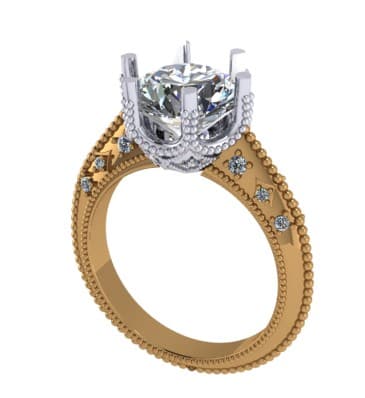
A poorly built model will produce renders that look obviously digital — flat, lacking the micro-detail that makes jewelry photography convincing. A well-built model with accurate metal and stone properties, rendered thoughtfully, can be genuinely indistinguishable from studio photography.
This is where the quality of the underlying CAD work matters enormously. A model built by someone with real jewelry manufacturing knowledge will capture the proportions, the surface transitions, and the setting geometry that make a render feel real.
What traditional photography still does better
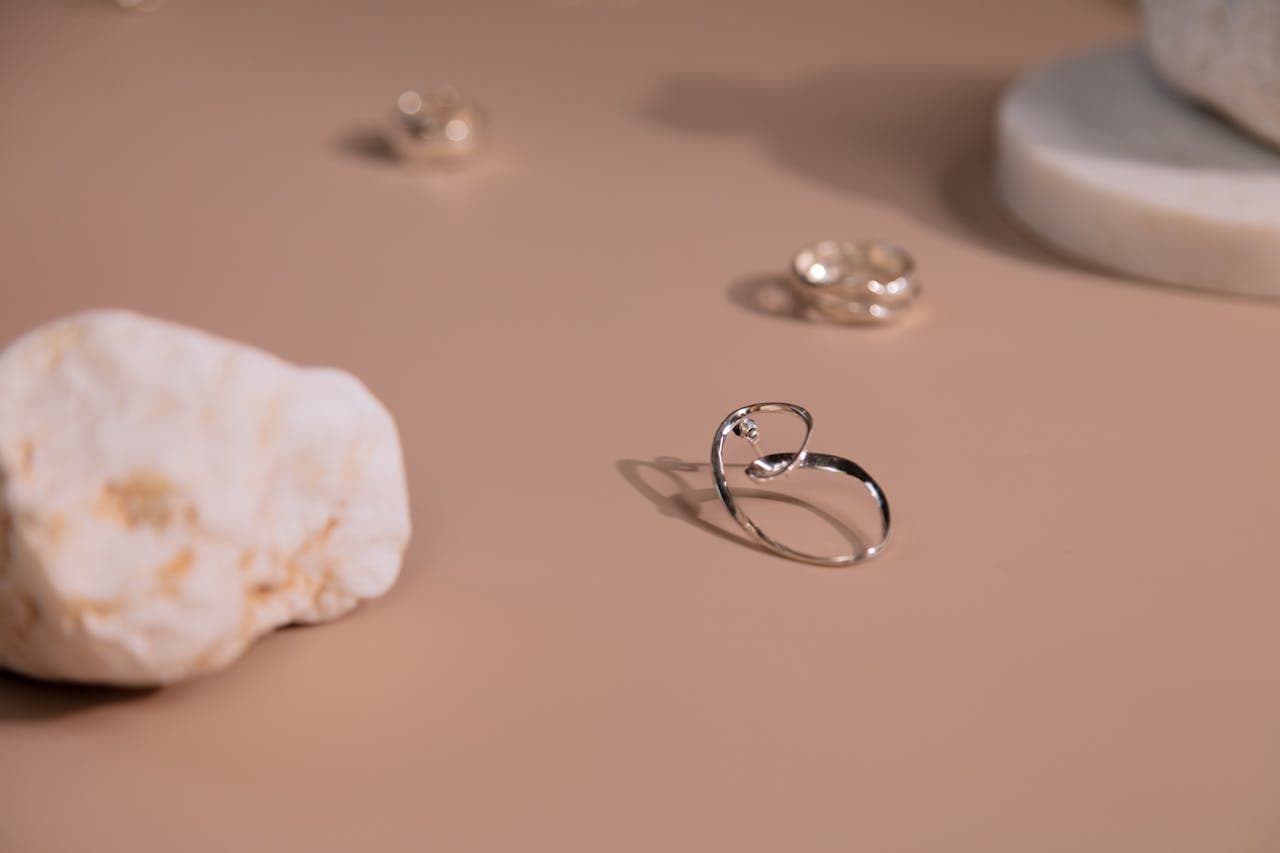
Photography captures something that renders cannot fully replicate: the specific, unrepeatable character of a physical handmade piece. The slight variation in a hammer texture, the unique way light catches a particular stone — these qualities are the essence of handcraft and they are difficult to represent digitally without exceptional modeling work.
For pieces where the handmade quality is central to the value proposition — one-of-a-kind work, textured surfaces, organic forms — photography may still be the right choice. The two approaches are not mutually exclusive: many jewelers use virtual inventory for their core catalog and photography for hero images and campaign materials.
The right question to ask
The choice between virtual inventory and traditional photography is not a binary one. The better question is: where in your business does each approach create the most value?
For most independent jewelers and small brands, virtual inventory makes the most sense for product catalog images — especially for collections with variations — while photography serves a role in brand storytelling, editorial content, and pieces where the physical reality of the object is part of what you are selling.
The goal in both cases is the same: to show your jewelry at its best, to the people most likely to want it.
Todd Michael
Master jeweler and founder of Virtual Goldsmith. 40+ years of hands-on goldsmithing experience across custom design, CAD modeling, and jewelry illustration.